Romania needs a political system oriented towards the business environment
We publish here the translation of the interview that Dante Stein has given to the online publication Romania 24 ore. You can find the original article here: http://romania24ore.ro/la-romania-ha-bisogno-di-un-sistema-politico-business-minded/#
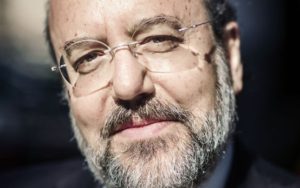
Dante Stein is not just a true Italian living and working in Romania for over 15 years but also a Romanian in the making, both formal, i.e. of the citizenship, and human.
After spending his childhood and adolescence in Italy he left the peninsula at the age of 15 to move with his family in Austria. Then, in 2000 he moved to Romania where, together with his father and brother, he was able to establish and successfully develop one of the largest companies in the country. Following this important experience, he became the adviser of Prime Minister Victor Ponta and created an efficient relationship between the political environment and the business one. Below is an exclusive interview conducted at the premises of „Make-a-Wish„, the NGO he runs, where he welcomed us with great warmth and sympathy.
– How and when has your Romanian experience started?
– The Romanian experience of my family started in 1993, when my father came to Romania as Fiat importer. I arrived a few years later because I was in Indonesia for an adventure I wanted to live while I was young, so I came in the year 2000.
– But you are born in Italy …
– No. I was born in Israel, but my mother was Italian, she was from Gubbio. My father came from Austria. When I was three years old, we all moved to Italy where I spent my childhood. I left at the age of 15 when my father brought the whole family to Austria. So I have an Austrian passport an now a Romanian one. The Italian passport is about to come out. My grandfather on my father’s side was Romanian, from a small village in Bucovina, which at the moment was on the territory of the Austrian Empire but now is in Ukraine, the city of Cernauti. So it was easy to obtain the Romanian citizenship, of which I’m proud.
„Life is made of adventures and decisions which have to be taken.”
– For a long time you played an important role in the management of Autoitalia, the sole Fiat importer in Romania. How was that period?
– There were three of us: my father, my brother and me. My father took care of everything because he was the founder, I was in charge of sales and marketing, as my specialization is marketing and my brother was mainly concerned with the financial side. We brought the company, and I’m proud to say this because it’s true, to a turnover of 262 million EUR right before the crisis. Even at European level, 262 million is an important figure. Besides sales, another thing that made us proud, and it still does, is that within the entire Fiat group, we certainly were importer no. 1 and there are about 50-60 importers all over the world. No. 1 concerning the market share, profitability, brand image.
Then, the crisis came, the banking crisis, the financial crisis, the worst crisis since 1929, which mainly destroyed two industries: the real estate and the car industry. For each normal person, these are the two main expenses that can be done. A computer of 1,000 EUR can always be bought while a 100,000 EUR house or a 40.000 – 60.000 EUR car can only if there is a financing or leasing system in place. After banks faced problems following the American crisis, nobody had money enough to afford such goods. The nicest part is that in 1996-1997 we brought to Romania the car leasing. Until then people here did not know this word: leasing.
We were giving them cars for 20-30% of the price and they couldn’t believe it was possible. And we were telling them it’s possible, they shouldn’t worry, just give us the documents. It was a time of customer education. But in 2008-2009, the market crashed from about 320.000 units to 75.000. It was crazy! We tried to keep the business alive and then we realized it was better to sell it and maybe it was a wise decision because even today, after four years, the market is still down and there are few units sold.
–And the sale was it a good business or was it a loss?
– It’s no secret, before the crisis we received a 3 digits offer and after the crisis we sold for a 2 digits (millions). The difference is huge. But we’re happy, it’s natural, life is made of adventures and decisions you have to take. For us it was a correct decision because we couldn’t finance the business any longer. If we had known the crisis would end at a certain date, for example July 1, 2017 at 10 o’clock in the morning, maybe we would have continued to invest in keeping the company even without a profit, but not knowing how long the crisis would last…It wasn’t an easy decision. From my point of view, the most difficult thing was to face our employees – I spoke for the family – and tell them we took this decision, there is a company that buys Autoitalia, and the message was they should remain as familiar with the new company owners, as they were with us. It wasn’t easy for us and it wasn’t easy for them, there were tears, emotions, it’s normal after 15 years of working together every day.
– How many employees did you have?
– About 120-130, but together with all dealers in the country we were 800 in all.
– And now you know how the market looks like?
– Things aren’t going too well because the market is still down …
„This is a dialogue that didn’t exist before”
– How did your Romanian experience continue after AutoItalia?
– Little before we sold AutoItalia, I was called one day by a very nice friend who told me: there is a person whom you should meet because you have a very much alike, similar mentality … it’s a guy named … Victor Ponta. And we went and ate at Isoletta, an Italian restaurant, and for the first time I saw a modern, progressive politician who understood how a country should be managed. I told myself: „He is the first Romanian politician I truly like”. Then I went almost daily at the party’s central headquarters from Kisseleff. During that time the party was in opposition but they initiated a censure motion against Government Ungureanu, they won, Ponta went straight to the Victoria Palace and I became an adviser to the Romanian Prime Minister. If someone had told me this a year before I would have said it’s impossible.
– But at the moment of the censor motion were you a member of the PSD Party?
– I have always been a member of the Social Democratic Party from Austria and before the censor motion I became a member of the Romanian party. I belong to the Austrian social democracy so it was a natural thing to do. I tried to help him with my experience as a businessman in relation to the business environment, so we created an entity which now is called „Coalitia pentru Dezvoltarea Romaniei” (transl. the Coalition for Developing Romania), which I practically set up. It was relatively easy because I had contacts in the business community. Today it’s a fact that this Coalition functions well. I had 19 meetings with the Prime Minister, intense meetings, were we spoke about business and the government, about country’s problems and how can we do all that is best for Romania. This is essential: now there is a structured dialogue which until now, for 25 years since the revolution it didn’t exist. It is very important to institutionalize this relationship and have a meeting every month with the Prime Minister and tens of meetings with various ministers in order to discuss the technical and functional aspects of the Coalition. After AutoItalia, this is the thing I’m most proud of because it works. The Prime Minister appreciates the idea and the business sector likes the Prime Minister’s pragmatism. They work well together.
„The country needs a reform and the Fiscal Code is a reform.”
– What is your opinion on the Fiscal Code reform and the President’s refusal to enact it?
– Here’s the situation. It’s like before we had a 1975 Dacia and now we have a Mercedes but …somebody doesn’t like the colour of the Mercedes! Unfortunately we go back to Basescu’s time, when substance didn’t matter, only who came up with the idea was important and if it didn’t come from the right person, we were automatically against it! This approach is not good for the country. The country needs reform and the Fiscal Code is a reform. Maybe it isn’t perfect but let’s work together on it. I am not an economist, but there are tens of economists in the Coalition who cooperated and worked together. Do you think it’s possible they all agree but the president says no? If there are technical issues – all right, we are told, we meet and discuss to understand them and solve them … for the benefit of the country. We leave aside the ideologies and speak together about the technical issues. “You don’t like the colour? OK. Which colour do you suggest? Another colour. Do you all like it? Yes? Very well!” But don’t tell me you don’t like the colour just because it comes from whom it shouldn’t! I don’t know the president personally, so I don’t want to express an opinion on a person I don’t know, with whom I never discussed. But one thing I disliked was that when the Prime Minister was called at the NAD (transl. National Anticorruption Directorate) on Friday, June 5, Ponta afterwards he went to the Cotroceni Palace to discuss with the President. Thirteen minutes after the Prime Minister left, the President went on television and requested the Prime Minister’s resignation. Now, according to my understanding, as coming from Austria, Germany, Italy or other countries, the President should play a conciliatory role, calming the situation, not inflaming the spirits. The President should be above parties. But in Romania, the current President slowly becomes a player president, just like President Băsescu.
„The problem in Romania is that the egos are too big”
– But there is a constitutional issue, Romania’s Constitution indeed allows the President to play a somewhat more important role than the constitution of the countries you mentioned …
– I agree and fully respect the Constitution. Only that in my opinion Romania’s Constitution should be revised. If all European countries have a system where the President is above parties and these countries function very well, maybe we should consider revising the constitution. If the President has a very strong personality, taking advantage of this unclear stipulation of the Constitution, he can extend his influence all over. As country, we cannot be in a position to depend upon the personality of a president. The Romanian Constitution must inspire itself from so many other countries in the world where the Prime Minister is the Executive Director in charge of the country’s administration and the President is the Head of the Board of Administration, who controls, watches, gives indications but does not intervene in the government’s activity. All governments in this world should be run like a company, but with a clear social responsibility and here, in Romania, is a great need to do this. I’m fully convinced that in the future, with a business oriented management we can become the 14th country of the 28 countries of the European Union. And I believe that Ponta has this vision. I see him every day, he is one of the most pragmatic and swift people, arriving immediately at the core of the problem. Of course, even he can do things better, but the problem in Romania is that the egos are too big. I wish this country peace, quiet, political predictability, because this affects the business environment. If we found a calmer system, more peaceful and predictable, Romania could be the 14th country of the European Union. But the possibility still exists because individually Romanians are extremely creative, with an entrepreneurial mindset and they are people who wish to work. Unfortunately, in the last 25 years, the top management, the different governments have not exploited the great potential of this country.
– How did your adviser mandate end?
– I was an honorary adviser and then I joined the Board of Administration of Tarom and there was a conflict of interest. Because Law 109 forbade this I decided to divide the two tasks. I was probably the only one who did. Now I only act as private adviser to the Prime Minister.
„What hinders us to have a better management?”
– You are a member in Board of Administration of Tarom and also of Telekom. Furthermore, you recently became member of the Board of Administration of Poșta Română (congratulations for this). How do you see the future of these large companies?
– I have an ambivalent position. As business man, I should say that the state doesn’t know how to manage businesses. In 1970 there was a similar situation in Italy. So, the state should come out of these companies, sell them for the best possible price and then leave the company to report back concerning their business. This is what my businessman heart tells me. However, as a patriot, because I am a Romanian citizen and I love this country, I believe otherwise: why should we sell the state companies only because we are not able to manage them? What hinders us to have a better management? Personalities exist, we have a law, and the legal framework can be built, then what? Are we, Romanians less intelligent than others? Absolutely not! The best example is Poșta Română. It works. In 2014, for the first time in six years it succeeded to have a positive balance sheet and during the first quarter 2015 it continued to grow. We start now with a wave of investments in order to improve the IT system and all the other things we need, we rebuild the organization chart for Poșta Română, to make it more competitive with other companies. At the end of this process we will have a company to make us all proud instead of selling it cheap to anyone. But for this we need three things: a minister to enable this process, a Board of Administration to apply it and a CEO just as capable. Recently, Alex Petrescu was re-elected as CEO and hopefully Poșta Română will become a success story.
With Telekom is a different problem. The Romanian Government holds 46%, therefore is a minority shareholder. We, the Board must simply facilitate the management concerning the legislation and other aspects. As for the state companies, in general, I must say privatization is not always a solution that guarantees success.
„To give some joy to sick children”
– You are the founder of the organization „Make-A-Wish” for Romania. How did everything start, what are the results and future projects?
– Make-A-Wish is the largest world organization specialized in fulfilling wishes for children with ages 3 – 18 struggling with fatal conditions. We ask these children to tell us what is their greatest wish and they tell us a lot of things such as: to meet football players, to have an iPhone, to go to the seaside, to fly, to be pilot for one day, to be fireman for one day, to have a washing machine, so that as a child put it, „my mother wouldn’t have to work that much and stay more with me”. We are 10 people, of which Luiza, a great girl, is the CEO. Many times we fulfill the last wish of these sick children who otherwise wouldn’t have had this chance. We try to make the impossible to fulfill their wishes. It’s this child who wants to visit Santa Claus in Norway and we have organized everything for November or December. He will fly there by plane, we shoot everything and Santa Claus is waiting for him, a whole story. The first child who had a wish was Cătălina, suffering from Hodgkin lymphoma and she wanted to go to a mall. We took her to the mall for a whole day, H&M offered us vouchers in amount of 1,200 EUR, we took her home with a white limo with cameras, that day she was a Hollywood superstar, a princess for a day. Then, a famous Romanian singer came, the little girl was so happy she could barely hold back her tears.
– How are these actions financed?
– Privately, but there are many companies which, to one degree or another, I closely know, so it’s relatively easy to contact them. Companies are very generous; they understand immediately the situations and are ready to offer hope. Since May, when we started to meet, we collected almost 100.000 EUR for these kids. It’s very good … these are the beautiful things in life.
– Is there a selection process for these children?
– Normally, doctors recommend us these children, we are in contact with various hospitals, we speak to them, we have a list of diseases that are authorized and we seek in one or two interviews to understand the child’s wishes and if they can be achieved. Then we check our budget, if we have the funds we need and I must say we always find solutions. Then, we start to build and organize everything to come to “delivering the wish”, always when there is the whole family the memory stays in the family. It is important to offer these memories to the family. Besides, sometimes these emotions make the disease regress. They are happy, I am happy …
„The Italian people saved my father’s life.”
– Recently, the President of the Republic, through the Italian Embassy in Bucharest awarded you the Order of the Star of Italy, rank of Knight. What does this award mean to you?
– A great joy! I have a special relationship with Italy, very special. I dedicated this award to the Italian people because the Italian people saved my father, who came in Italy from Austria during the Second World War. When Adolf Hitler started making problems in Europe, my father, like many other families, left Austria, meeting in Italy the allies who were coming from Africa through Sicily. My father stopped in Naples, the Italians welcomed him with open arms, then the allies came and everything went very well. If it weren’t for the Italians … My father covered the entire peninsula on foot, together with his family, entering through the Piedmont, Genoa, and Mille Terre and then descended further towards Tuscany, Rome, all on foot, with a wagon with three people behind. Finally he arrived in Naples where he was well received. We feel Neapolitan. For me, Naples is the city that touches me the most. My father was the first to become Knight and then Commander, even my wife’s father is a Commander there are three of us in our family. Unfortunately there are about 5-6 years since I last went to Naples which I love so much.
– In the end, please send a message to the Italians in Romania …
– I’d tell Italians to continue to believe in this country and be part of its civil society in order to contribute to a better country because everybody needs help. We still have so many things to do.